Model Serving
Model serving is the practice of deploying trained machine learning models behind stable APIs or inference endpoints so that applications can send input data and receive predictions. It covers the entire production stack: model loading and warm-up, request batching, hardware acceleration (GPU/CPU routing), autoscaling, version management, health monitoring, and failover.
Serving frameworks like NVIDIA Triton Inference Server, TensorFlow Serving, TorchServe, and BentoML handle the operational complexity. Dynamic batching groups multiple incoming requests into a single forward pass to maximize GPU utilization. Model ensembles chain a preprocessor, detector, and postprocessor in sequence. Multi-model serving runs several models on shared GPU pools, routing requests based on the endpoint. Containerized deployment via Docker and Kubernetes is the standard for reproducibility and horizontal scaling.
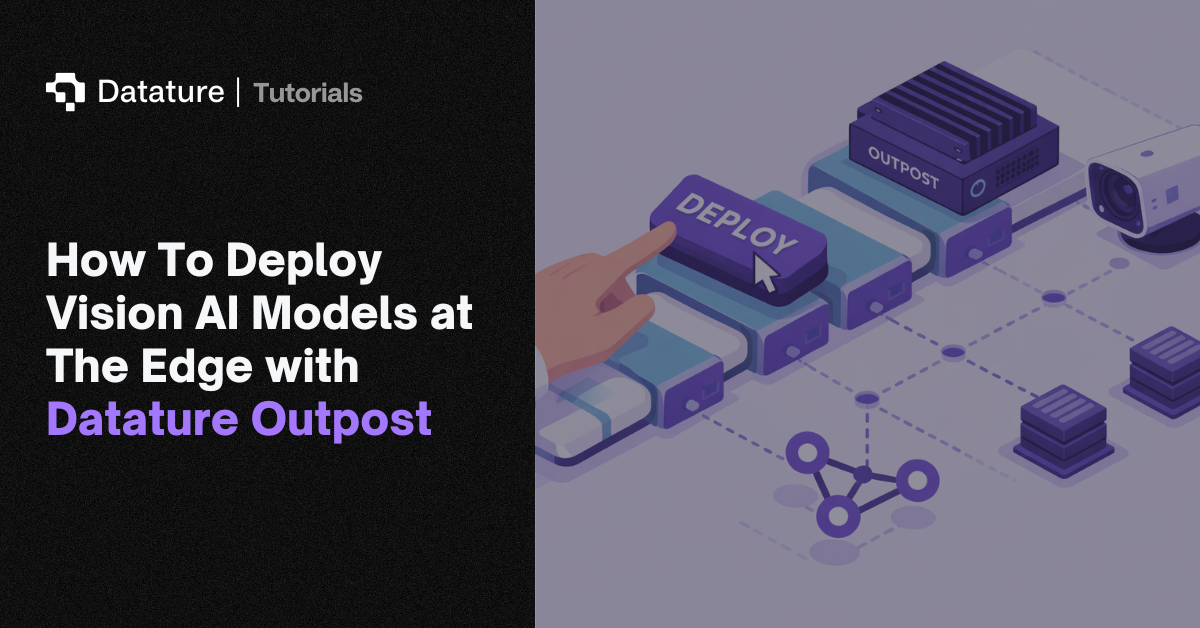
In computer vision, serving must often meet strict latency budgets (sub-100ms for real-time video streams) while handling variable input resolutions and burst traffic. A/B testing between model versions lets teams roll out improvements gradually, and canary deployments catch regressions before they reach all traffic. Datature's Outpost enables edge model serving, pushing inference directly onto on-premise or IoT devices without cloud round-trips.

.jpg)